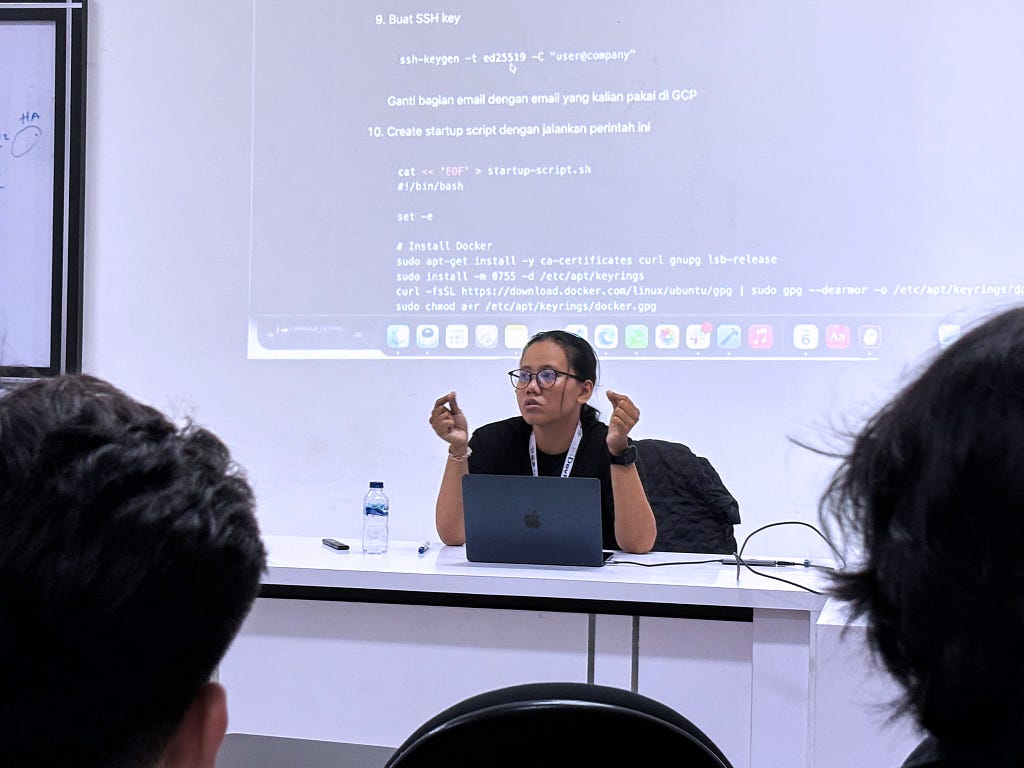
Hiiii! For now, I’m stepping away from technical content to share something more personal — lessons I learned about soft skills and public speaking. So let’s get right into it.
If you’ve been following my social media — LinkedIn or Instagram — you’ve probably noticed I’ve been invited to speak at three training sessions or workshops. I can hear some of you thinking,
“Just three? That’s not much to brag about.”
You’re right, I’m definitely not a veteran speaker. But since I wanted to contribute and had the bandwidth, I thought, why not? I accepted all opportunities, and I’m happy to report they went really well.
That said, the journey wasn’t all smooth sailing. In the days leading up to each event, my confidence took some serious hits. I even considered backing out at one point, but ultimately stuck with it out of respect for the organizers. Those challenging moments turned out to be incredibly valuable — they taught me lessons that not only got me through those first three workshops but will help me succeed in future speaking engagements.
When you get a workshop invitation — whether it’s for a talk, training session, or knowledge-sharing event — dig deep into the details. Who’s organizing it? Is it a university student organization? A professional community? A tech meetup? Understanding the context helps you tailor your content appropriately and figure out what support the organizing team can provide for materials and logistics.
As someone working in software development agency, my schedule fluctuates wildly. Some weeks I’m drowning in deliverables, other times it’s relatively calm as we approach project handoffs. Whatever your work situation, be realistic about your availability. If the timing doesn’t work, it’s perfectly acceptable to decline — just do it graciously.
Better yet, when you first receive an invitation, resist the urge to immediately commit or decline. Take 1–2 days to honestly assess your calendar. This prevents you from ghosting organizers later or overcommitting yourself.
This one’s crucial. Don’t obsess over attendance numbers. Don’t pester the organizers asking, “How many people have signed up?” Trust me on this — checking registration counts will only psych you out and negatively impact your preparation.
When I was struggling with pre-event jitters before my first workshop, my manager shared a video clip from one of his conference talks. His key message stuck with me:
“So basically, there is no weight parameters that you can use how successful your event. But there is someone else that ask addresses your event is success”
— Mas Doni Rubiagatra at PyCon Korea 2018
Even before that advice, I’d written myself a reminder on X (formerly Twitter) that became my mantra:
“prinsip 1: mau sedikit orang yang dateng, ya tuntun orang itu aja. gak usah punya ekspektasi tinggi bakal banyak yang dateng. apalagi ini pertama kali kamu jadi pemateri di sesi workshop. its okay, kamu bisa sin! kamu punya pengalaman yang related, harusnya kamu bisa!!!”
Don’t try to teach topics you’re not confident about. Cramming unfamiliar material while juggling a full-time job is a recipe for stress and subpar delivery. Instead, lean into your actual professional experience and knowledge.
For example, if you’re a DevOps engineer, you might cover foundational concepts for beginners or dive into advanced techniques for experienced practitioners — whatever matches both your expertise and your audience’s needs.
Think bigger than just your presentation deck. Do you need external equipment like a projector, adapters, or a laser pointer? Communicate those needs to organizers early. Also prepare supplementary resources: sample code repositories, reference links for post-workshop learning, cheat sheets, etc.
If you have mentors — friends, former professors, significant others, or team leads — who’ve spoken at similar events, pick their brains. Their insights can be invaluable.
Why physical preparation? Because workshops are demanding. You’re not just lecturing — you’re facilitating hands-on exercises, troubleshooting participant issues, and staying on your feet. That’s genuinely tiring.
Mental preparation ensures you can deliver your carefully prepared content clearly and coherently. New to public speaking? Start small: practice presentations with friends, record yourself on camera, or even rehearse in front of a mirror. Seriously, try it — it helps.
Sometimes you’ll encounter participants who are somewhat familiar with your topic, even if they haven’t fully mastered it. Don’t spiral into self-doubt thinking,
“I’m such a fraud. My own attendees know more than me.”
Stop right there — that’s the wrong takeaway.
Instead, view this as a golden opportunity. These participants can be your workshop assistants indirectly. When other attendees struggle, these more experienced folks can step in and help. Think about it from their perspective: they’re reinforcing their existing knowledge by teaching others, which is one of the best ways to solidify learning.
And here’s the bonus: it lightens your workload and helps you manage workshop time more effectively. Everyone wins — participants get peer-to-peer support, your helpers deepen their understanding, and you can focus on keeping the session on track. Pretty smart, right?
That got pretty detailed, didn’t it? Well, these are real lessons from real experience. These are the insights I gained while preparing for my first workshop, and they’ve served me well since.
Bottom line: when opportunities come your way, grab them. Speaking engagements build your soft skills portfolio and strengthen your community contributions. Thanks for reading, and catch you in the next post!